Warranty work lands on an empty desk
A call comes in fourteen months after substantial completion. The project manager has moved to other work or left the company. The foreman who installed the assembly is on a different job. The as-built information is in a closeout package nobody has opened. Someone dispatches a technician because the client is unhappy, and the cost is absorbed without anyone checking whether the item was even covered.
Handled repeatedly, this quietly consumes margin on completed jobs and makes warranty exposure impossible to estimate on future ones.
Give warranty requests a front door
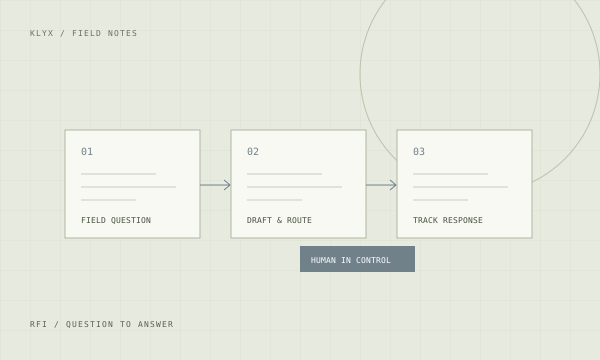
The first fix is a defined intake. One address or number, one person or rotation responsible, and a logged record with project, date, reported issue, reporter, and urgency. Without this, requests arrive at whichever phone number the client still has and are handled inconsistently by whoever answers.
Intake is also where classification helps. Routing the request to the right trade, retrieving the relevant closeout documentation, and identifying whether the item is under a manufacturer warranty are all mechanical steps that can be prepared before a person picks it up.
Check coverage before dispatching
Three questions determine the response. Is the warranty period still running. Is this a defect in your work, a manufacturer defect, or damage caused by misuse or lack of maintenance. Is there a manufacturer warranty that should handle it directly. Each leads somewhere different, and skipping the check means performing free work you never owed.
Answering requires the contract warranty terms, the closeout documents, and the installation record. If those are organized and retrievable, the check takes minutes. If they are in an unsorted archive, it takes longer than dispatching a technician, which is why it usually does not happen.
Track warranty cost by project and cause
Warranty cost is one of the most useful feedback signals a contractor can collect, and one of the least collected. Recording each event with its cause, the trade involved, and the cost reveals whether the pattern points at an installation practice, a product choice, a specific crew, or a design detail that keeps recurring.
That record also informs estimating. A contractor who knows what warranty actually costs by project type can carry a realistic allowance instead of treating it as an unbudgeted surprise. Handled well, warranty response is also one of the more reliable sources of repeat work, because the client remembers who showed up.
Set expectations at handover
Many warranty disputes stem from a mismatch between what the client believes is covered and what the contract actually says. A client who expects a comprehensive service arrangement and receives a defect-only warranty will be unhappy regardless of how well you respond, and the disagreement surfaces at the worst possible moment.
Hold a short handover conversation covering what is covered and for how long, what requires maintenance to stay covered, how to report an issue, and what response time to expect. Document it and provide it with the closeout package. Fifteen minutes at handover prevents a category of conflict that otherwise recurs on every project.
