Start with evidence, not a dollar amount
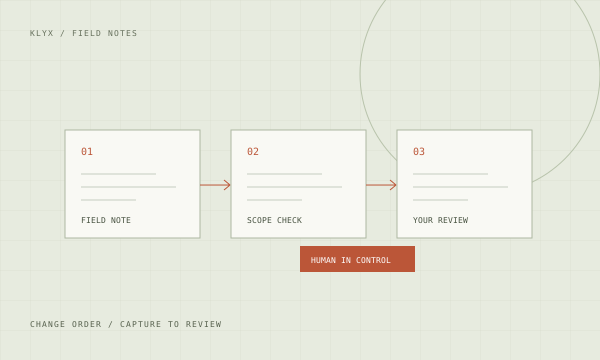
A field instruction can arrive as an email, a marked-up drawing, or a conversation. If that information stays with one person, the office may learn about the change only after the work is complete. Start by giving the field team a consistent way to record what changed, who requested it, when it happened, and which job it belongs to.
A photo and a short note are often a useful starting point. They are not automatically proof of an approved change. Keep the original source attached so the project manager can check scope and follow the project’s notice requirements.
Create one review queue
Route potential changes into a queue with a named owner. Separate “needs review,” “pricing in progress,” “submitted,” and “resolved.” The goal is to make the next action clear without requiring a project manager to search every inbox.
AI can help classify incoming notes and assemble a draft summary. A person still needs to check whether the work is outside scope, whether the description is accurate, and what documentation the general contractor requires.
Keep pricing and submission under human control
Connect the draft to supporting labor, material, and equipment information. Flag missing inputs rather than inventing costs. An authorized reviewer should approve the amount and submission package before anything is sent externally.
Track the submission date and follow-up owner. An unanswered change needs a next action; a rejected change needs a recorded reason. Approval, billing, and payment are different milestones, so keep those statuses distinct.
Measure the process before scaling it
Start with one active project. Review how long it takes a field note to reach the project manager, how many records lack supporting evidence, and which items have no owner. These are more useful starting measures than a broad promise of recovered revenue.
KLYX can help map that workflow and identify where automation would reduce repeated administrative steps. Bring an anonymized example of a recent change to the first conversation.
