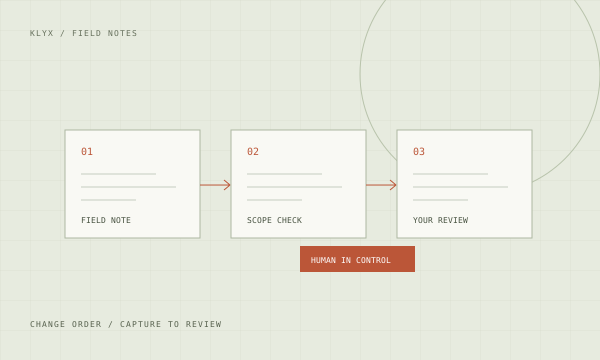
The loss happens before the paperwork does
The classic change order failure is not a rejected submission. It is a superintendent who was asked to move something, did it because the schedule demanded it, mentioned it in passing, and never wrote it down. Four weeks later the project manager finds out at a progress meeting. By then the work is buried, the contract notice period has passed, and the argument is no longer about price. It is about whether the change happened at all.
This means change order management software that starts at the pricing stage is starting too late. The control point is the moment a field directive is given. Whatever system you build has to be usable by a foreman standing in a corridor with a phone in one hand, or it will not be used.
Make capture take under a minute
The capture step needs four things: what changed, who directed it, when, and which job. A photo and two sentences satisfies all four. Anything more elaborate will be skipped on the days it matters most, which are always the busy days. Keep the original source attached, whether that is an email from the general contractor, a marked-up sheet, or a note recording a verbal instruction and the person who gave it.
Be clear internally about what capture is and is not. A recorded note is evidence that a conversation happened. It is not an approved change and it is not authorization to proceed. The project manager still has to check the contract scope, confirm the notice requirements, and decide how to proceed. What capture guarantees is that the decision gets made with the facts available, on time.
One queue, one owner, visible status
Every captured item lands in a single review queue with a named owner and a clear state: needs review, pricing in progress, submitted, approved, rejected, or closed as no change. The states matter because they carry different next actions. A submitted change with no response for three weeks needs a follow-up. A rejected change needs a recorded reason. An approved change needs to reach billing, which is a separate milestone from approval and frequently gets conflated with it.
AI assistance is well suited to the assembly work here. Pulling the relevant correspondence, drafting the narrative description, matching the item to the right cost codes, and flagging what is missing. The pricing and the decision to submit stay with an authorized person. That division keeps the speed benefit without putting an unreviewed number in front of a client.
Track aging, because stalled changes are the real problem
Most contractors track how many change orders are open. Fewer track how long each has been open and who is holding it. That second number is where the money sits. A change order waiting on your own pricing is an internal capacity problem. One waiting on the general contractor is a follow-up problem. One waiting because nobody knows who owns it is an organizational problem. The fixes are entirely different.
Set a response window and escalate automatically when it passes. Review the aged items weekly with the project team. When you start the process, run it on a single active project and compare the change order log against what the field crew remembers happening. The difference between those two lists is the size of the leak you are closing.
Notice requirements are the hard deadline
Most commercial contracts require written notice of a change within a defined period, often measured in days from when the condition was encountered. Miss it and the contractual right to compensation can be lost regardless of how well documented the work is. This is the deadline that makes change order capture urgent rather than merely good practice.
Build the notice clock into the workflow. When a potential change is captured, the system should know the contract notice period for that project and surface the deadline immediately, escalating as it approaches. The project manager decides whether and how to give notice, because that is a contractual judgment. What should never happen is the deadline passing because no one was tracking it.
